
Here's the thing about introducing a toy with your partner
The lemon vibrator question isn't really about the toy. It's about vulnerability. You're saying: "I want to explore this together." That's the conversation that matters. The actual vibrator? That's just the vehicle.
I've worked with hundreds of couples navigating this exact moment, and I can tell you what makes the difference isn't the intensity level or the brand. It's knowing what to do with your hands when you press the button for the first time.
Why starting low actually keeps things connected
This is counterintuitive, but bear with me. Your instinct is probably to show your partner what feels good by ramping up to a setting you know you like. Don't. Here's why.
When you introduce the lemon vibrator at setting 1 or 2, three things happen at once. First, you stay present. You're not lost in the sensation. You can talk. You can laugh. You can actually look at your partner's face, which matters way more than you think when you're doing something new together. Second, you preserve the ability to build. In a partnered scenario, steady escalation keeps both of you engaged. If you lead with intensity 6, there's nowhere to go except off. Third, and this is clinical fact: lower settings on clitoral vibrators stimulate more nerve endings than higher ones do. The suction-based design of something like the Lem works differently than traditional vibration. At setting 1, you're getting micro-stimulation across the entire clitoral network. At setting 7, you're getting focused pressure. Both feel good. But one feels like discovery. The other feels like you know exactly what you're doing, and if you don't, it's awkward.
The three settings that matter for first-time partnered use
Most lemon clitoral vibrators have 7-10 settings. You'll really only use three in this scenario.
Setting 1: The exploration phase. This is your opening move. Turn the lemon vibrator on at the lowest intensity and spend 3-5 minutes just touching, talking, and getting comfortable with the sensation being present. Your partner might apply it. You might. It doesn't matter who holds it. What matters is you're both agreeing to the same thing. If nerves are present (and they usually are), this is where you address them by doing something together. The sensation is subtle enough that it isn't overwhelming, but present enough that you both feel it.
Setting 3 or 4: The "Oh, I see" phase. After a few minutes on the lowest setting, bump it up incrementally. This is where most people actually feel what all the fuss is about. The difference between setting 1 and setting 4 on the Lem is noticeable but not jarring. You're increasing pressure and frequency without going full intensity. Spend time here. This is where feedback loops form. You might say "that feels amazing" or "try a little lower." Your partner learns how your body responds. You learn that you can speak up. These 5-10 minutes are worth more than 20 minutes of pure sensation at higher settings.
Setting 6 or 7: The "if you want to" phase. By now, you've spent 10-15 minutes building. If intensity feels good and you both want to explore it, go ahead. But notice: you've earned the context to do this. You're not starting there. You're arriving there. There's a difference in how it feels when you've built toward something together versus when you just hit play on maximum.
The conversation before the toy comes out
I talk to couples about "the frame," which is just therapist shorthand for "what you both believe is happening right now." When you introduce a lemon vibrator, you need a shared frame. That means saying something like:
"I really enjoy exploring pleasure with you, and I'm curious about this. I'd love for us to try it together. No pressure, no performance. Just let's see how it feels."
That's it. You're not asking permission. You're inviting participation. You're naming what matters: the "us" part, not the toy part. If your partner seems hesitant, pause. Ask what's making them nervous. Often it's not the toy. It's worry that you're unhappy with what they're doing. It's fear that toys mean they're "not enough." Neither of those is about the Lem. Both of those are about connection. Once you name it, the toy becomes way less threatening. It becomes the thing you're exploring together instead of the thing that exposes a gap.
What to do when intensity doesn't feel like enough
Here's a scenario that comes up often: you try the lemon vibrator at what should be a comfortable setting, and it feels numb or distant. Sometimes that's nerves. Sometimes that's natural desensitization from other tools you've used. Sometimes it's just how your body responds to external pressure from a partner versus solo touch.
Before you jump to setting 7, try this instead. Reduce the pressure. I know that sounds backward, but less direct contact often creates more sensation. Let the lemon vibrator hover slightly away from the clitoris instead of pressing directly on it. The suction design of clitoral vibrators means they work well from a distance. You might also pause vibration and move the toy slowly without the setting on, just to rebuild sensitivity. Sometimes the issue isn't intensity. It's that your nervous system needs permission to feel good in front of another person, and that takes 10 minutes of building, not 10 seconds of settings adjustments.
The rhythm that actually works
I want to save you the trial-and-error phase. Here's the structure that works with almost every couple I've coached:
Start at setting 1. Set a timer for 5 minutes. During those 5 minutes, your partner is holding the lemon vibrator and watching your face. They're not operating it solo. They're participating in it. After 5 minutes, ask: "Want to go a little higher?" Not: "I'm going higher." Ask. At setting 3 or 4, spend another 5-7 minutes. Check in again. By 10-12 minutes in, you both know if higher intensity serves you. If it does, move to 6 or 7. If it doesn't, stay where you are. There's no "should" here. The setting that feels good is the right setting.
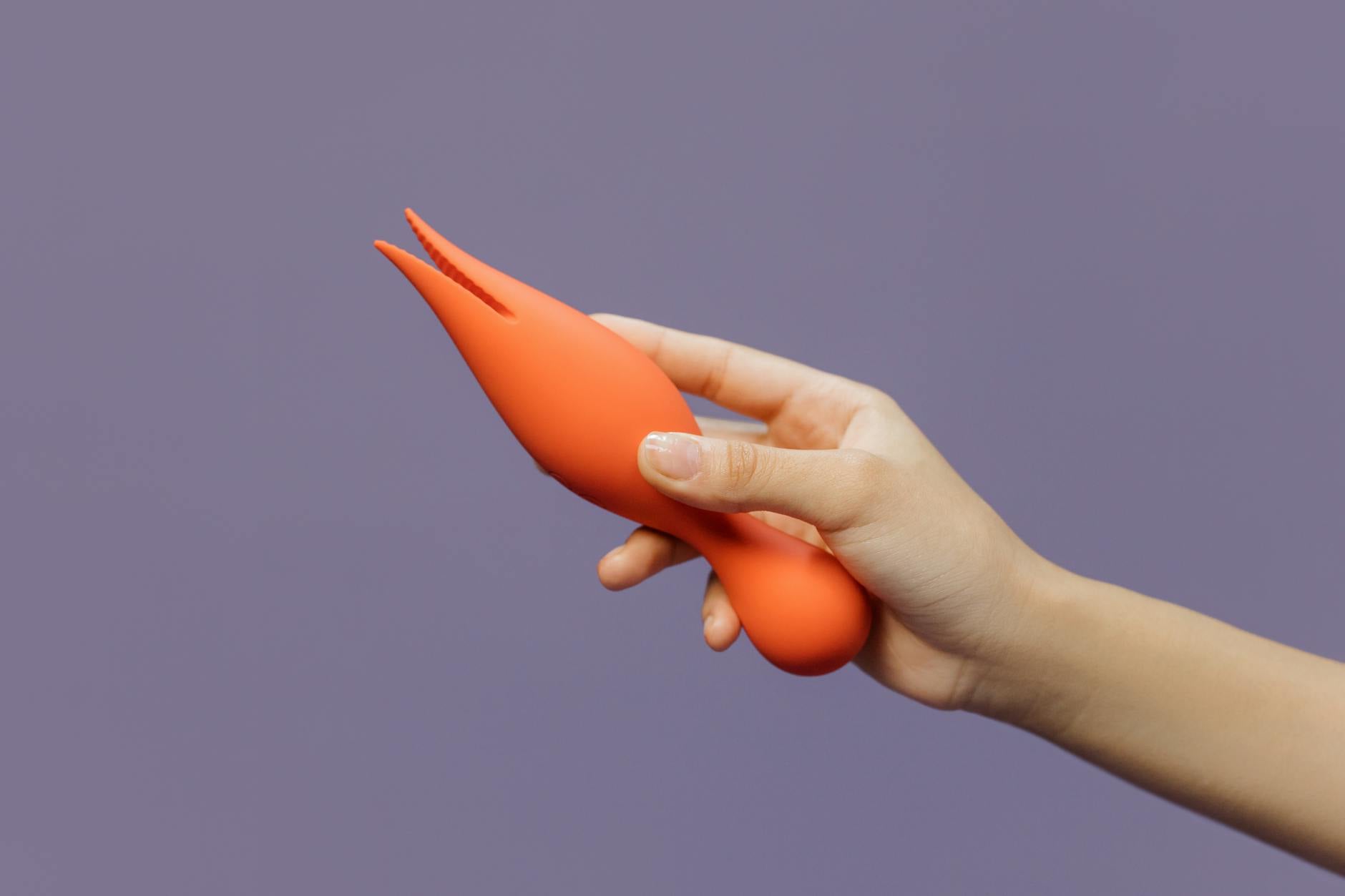
Photo by cottonbro studio on Pexels
When to introduce the lemon vibrator into partnered intimacy
Timing matters. Don't introduce it 30 seconds before your partner is about to orgasm, hoping the intensity will push you over the edge. You'll create pressure and resentment, not pleasure. Instead, bring it out when you're both warm, relaxed, and genuinely curious. That usually means 10-15 minutes into intimate time, when you're already aroused but not at the point of no return.
Also: if it's the first time, lead with solo use first. You try the lemon clitoral vibrator alone. You learn which settings feel best for your body. Then, when your partner is involved, you're not discovering the tool and the vulnerability simultaneously. You're bringing expertise into the partnership, which shifts the dynamic from "let's see what this does" to "I want to share something I enjoy with you." That nuance changes everything.
The aftermath that actually builds connection
Here's what people don't talk about: what happens after you turn the lemon vibrator off matters as much as what happens while it's on. You want to stay connected. Keep touching. Cuddle. Talk about what felt good. Not in a clinical debrief way. Just: "That felt really nice" or "I loved watching you." You're normalizing the fact that you just did something intimate and good together. You're not making it weird. You're making it normal. The next time, it will be easier. The time after that, easier still. By the fifth time you bring out a lemon vibrator together, it's not a big deal. It's just part of how you explore together.
What settings mean for ongoing play
Once you've established that you enjoy the lemon vibrator together, settings stop being a "problem to solve" and become part of the language of your intimate time. You might discover that setting 2 is actually your sweet spot for extended sessions because it builds sensation without plateauing. You might find that you like starting low and finishing high. You might learn that your partner loves watching you respond to setting 5 more than you enjoy being at setting 5 yourself. These discoveries are what make partnered exploration actually better than solo play. You're learning about each other.
Quick reality check
If one of you tries the lemon vibrator with settings and genuinely doesn't like it, that's fine too. Not every toy works for every body. The point was never the tool. It was the conversation, the vulnerability, the willingness to try something together. If it doesn't feel good, thank each other for trying, put it away, and move on. You didn't fail. You explored. That matters.
FAQ: Settings, nerves, and what comes next
What if my partner seems uncomfortable when I mention the lemon vibrator?
Stop. Ask what you're sensing. Nine times out of ten, it's not discomfort with the toy. It's worry that you're unsatisfied with them, or concern that toys are a sign something's broken in the relationship. Address the actual fear, not the tool. Something like: "I love being with you. I'm curious about this because I want to explore more together, not instead of you." Usually that's enough.
Does starting on a lower setting mean I won't feel much?
The opposite, actually. Setting 1 or 2 on a suction-based lemon clitoral vibrator stimulates more nerve endings than setting 7 does. You might feel more at lower settings, not less. The sensation is just distributed differently. Start low. Stay present. You'll be surprised.
My partner wants to operate the lemon vibrator, but I'm nervous about relinquishing control.
That's valid. Try this: you hold it for the first session and show your partner where and how it feels best. Next time, hand it over but keep your hand on theirs. You're guiding together. By the third time, they might take it solo. You're building trust incrementally, not all at once.
How long should we spend on each setting before moving up?
There's no magic number, but I usually suggest 3-5 minutes minimum per setting. You need enough time to acclimate and to check in. If you rush through settings, you miss the building phase, which is actually the most intimate part. Slow down. You've got time.
What if the lemon vibrator stops feeling good mid-session?
Turn it off. Take a break. Sometimes your body needs a reset. Sometimes the toy isn't working that day. Sometimes you just need to touch without the vibration for a minute. None of these mean failure. They mean your body is communicating. Listen to it.
Can we use the lemon vibrator every time we're intimate?
You can, but most couples find that mixing it up works better. Use it sometimes. Skip it sometimes. This keeps it feeling exciting rather than obligatory. Toys are tools for expansion, not replacements for direct partnered touch.
The bottom line
You're not nervous about the lemon vibrator. You're nervous about vulnerability. The good news: if you can bring a toy into the bedroom together, you can probably have harder conversations too. You've already proved you can do the vulnerable thing. The settings are just details. Start low. Talk. Build. Let it feel good. That's the whole framework.
If you're still uncertain about bringing this up, I'd suggest starting with something smaller. Read about why couples use lemon clitoral vibrators together. Share the article with your partner. Sometimes permission to have the conversation is all you need. The rest unfolds naturally.
You deserve pleasure. Your partner deserves pleasure. And the two of you deserve to explore that together, at whatever pace feels right. Settings 1 through 7 are just the map. You're writing the journey.